If you are dreaming about buying acreage on Wadmalaw Island, it helps to know that more land does not always mean more flexibility. Rural coastal property can offer privacy, room for horses or farming, and a slower pace, but it also comes with rules and site conditions that can shape what you can actually do with the land. This guide walks you through the key issues to review so you can move forward with more clarity and confidence. Let’s dive in.
Why Wadmalaw acreage is different
Wadmalaw Island is planned as a very low-density rural area in Charleston County. County policy emphasizes agricultural preservation, protection of the natural environment, and maintaining the island’s low-density character.
That matters because buying 10, 20, or 50 acres does not automatically mean you can create multiple homesites or subdivide later. On Wadmalaw, the county’s planning framework is designed to keep development intensity low, especially in agricultural and coastal areas.
Start with zoning and density
Before you fall in love with a tract, confirm the property’s zoning district and future land use designation. On Wadmalaw, agricultural zoning districts can vary by parcel, and each district has its own density standards.
For example, AG-15 allows one principal dwelling per 15 acres, AG-10 allows one per 10 acres, and AG-8 allows one per 8 acres. In some areas within 1,000 feet of the OCRM Critical Line, the maximum density can be limited to one dwelling per 3 acres.
The takeaway is simple: acreage alone is not enough. You need to know the exact district, whether any coastal critical-line conditions apply, and how those rules affect your intended use.
Why parcel location matters
Two properties with similar acreage can have very different development potential. A tract near marsh, water, or the coastal critical line may face tighter density limits than a more inland parcel.
That is why rural land should always be evaluated as a parcel-specific opportunity, not just by lot size or price per acre. The details on the map can matter as much as the acreage in the listing.
Access can make or break a property
One of the first practical questions to answer is how you legally and physically reach the land. Charleston County requires lots to have a means of access, and private access situations must meet county and fire code standards.
If the parcel relies on an easement or private right-of-way, confirm that it is recorded and built as required from the existing public right-of-way to the lot. You will also want to understand who maintains the road or driveway and whether emergency access is adequate.
Watch for flag-lot issues
Some rural parcels have narrow access corridors that trigger flag-lot rules. In Charleston County, the flagpole portion must have a minimum width of 20 feet and a maximum length of 450 feet.
If a tract is narrow or irregularly shaped, those standards can affect future plans. This is especially important if you are considering a homesite tucked deep into the property for privacy.
Utilities are rarely plug-and-play
On Wadmalaw, utility planning often takes more effort than buyers expect. Public sewer is not widely available across rural island property, so it is important to verify service rather than assume it exists.
Charleston Water System says its direct retail sewer service is limited to certain areas, and buyers should confirm service availability for a specific parcel. If sewer is not available, septic feasibility becomes a critical part of due diligence.
Septic and well approvals matter early
For properties not served by a public or community sewer system, South Carolina requires SCDES approval and a septic permit before a county building permit can be issued. New private residential or irrigation wells also require SCDES Notice of Intent permitting, and the work must be completed by a certified well driller.
In practical terms, that means you should investigate well and septic feasibility before closing, not after. If your purchase depends on building a home, barn, or other improvements, those approvals are central to the property’s usefulness.
Private well testing is still important
SCDES notes that it does not regulate the water quality of private wells and recommends that its well-water tests not be used for real estate transactions. For buyers, that means private-well testing should be part of your own due diligence plan.
If a parcel already has a well, treat water quality and system condition as items to verify carefully. It is better to ask those questions early than to make assumptions based on an existing pump or well house.
Flood risk and drainage need early review
On a coastal island, flood and drainage questions should be part of your first review of the property. FEMA flood maps help mortgage lenders determine insurance requirements, but they do not tell the whole story.
Charleston floodplain guidance notes that areas outside a FEMA Special Flood Hazard Area may still experience local drainage issues, unmapped floodplains, sea level rise, or other hazards. That is why flood-zone status should be confirmed alongside real-world site conditions.
Look beyond the map
A property may appear straightforward until you study how water moves across it. Low spots, marsh-adjacent areas, and partially cleared tracts can all raise design and cost questions.
Before finalizing price expectations or insurance assumptions, ask for current flood-zone information and any available flood-hazard documentation. On acreage, drainage can affect where you build, how much clearing is practical, and what improvements may cost.
Stormwater rules can apply quickly
Many buyers assume stormwater review only matters for large developments. In unincorporated Charleston County, a stormwater permit can be required for land disturbance over 5,000 square feet.
That threshold can be reached faster than you might think. A driveway, house pad, barn pad, grading work, site clearing, or drainage improvements can trigger review even on a private residential project.
Existing improvements deserve a closer look
If the seller has already cleared land or added improvements such as a long driveway, arena, or building pad, it is worth confirming whether any required review or permitting was handled. This is an easy detail to miss when a parcel looks move-in ready from the road.
For buyers planning future improvements, stormwater requirements should be part of the budgeting conversation from the beginning. On rural coastal land, site work can be just as important as the purchase price.
Subdivision potential is often limited
A common question with acreage is whether you can split the property later. On Wadmalaw, the answer depends on more than size.
Charleston County subdivision rules can involve lot width, access, road standards, easements, and water and wastewater compliance. In some cases, rural and agricultural parcels may need additional review before a subdivision exemption or approval is possible.
Conservation and environmental review may apply
Conservation subdivisions are allowed in the RR and AG-8 districts, but they require a pre-application sketch plan and a resource analysis. That analysis identifies features such as wetlands, floodplains, wildlife habitat, significant vegetation, and historic buildings.
Even if your plans are modest, environmental mapping can become important on vacant land. A tract that looks simple on paper may contain natural features that shape where and how future development could occur.
Farm and equestrian use require more than acreage
Wadmalaw can be very appealing if you are looking for room to farm, keep horses, or enjoy a more land-based lifestyle. Charleston County defines bona fide agricultural use broadly, including raising or storing crops, managing livestock, and producing plants, trees, fowl, or animals useful to people.
Still, intended use should always be matched to zoning and county rules. Raw acreage alone does not confirm that your farm or equestrian plan will fit the parcel.
Questions horse buyers should ask
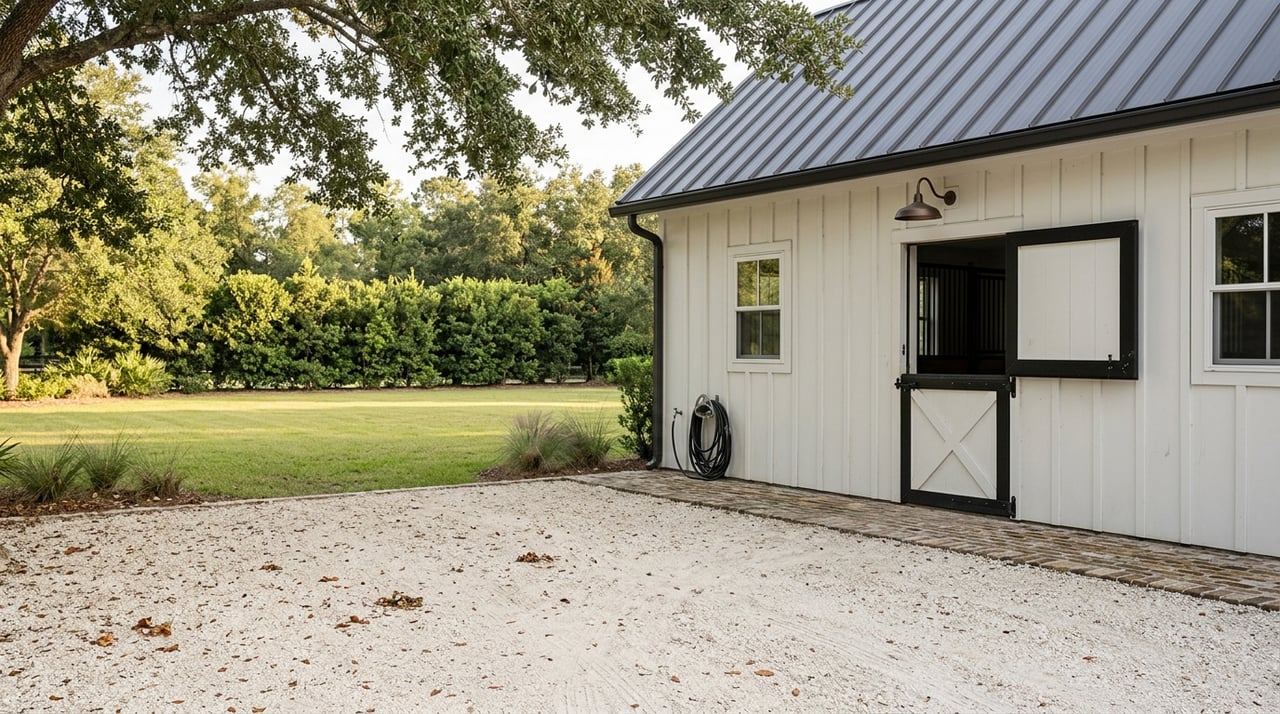
Charleston County’s rules for stables are specific. Private stables in conditional districts require at least 1 acre, and boarding stables require at least 5 acres.
County rules also state that riding areas and trails are generally limited to the subject parcel unless recorded access to other land is provided. If you are considering a horse property, confirm whether your intended stable type and related structures are allowed by right, subject to conditions, or require additional review.
Agricultural assessment has its own rules
Some buyers also want to explore agricultural assessment. Charleston County’s application materials note that restrictive subdivision covenants may prevent agricultural assessment, and a change in use of classified agricultural property can trigger rollback taxes.
If that is part of your ownership strategy, make sure you understand both the filing requirements and the long-term implications. Tax treatment should support your intended use, not come as a surprise later.
A smart due diligence checklist
On Wadmalaw Island, the strongest acreage purchases are usually the result of patient, careful review. A beautiful tract can absolutely be the right fit, but the best outcomes come from verifying the details that matter most.
Use this checklist as a starting point:
- Verify the current zoning district and future land use designation.
- Confirm road access, driveway ownership, and recorded easements.
- Check sewer availability, septic feasibility, and well requirements.
- Review current flood-zone and drainage conditions.
- Ask whether your intended farm or horse use fits the zoning district.
- Determine whether stormwater, subdivision, or site-plan review may be required.
Buying acreage on Wadmalaw Island is less about maximizing density and more about understanding the land in front of you. When access, utilities, environmental constraints, and allowable use are clearly understood, you are in a much stronger position to buy with confidence.
If you are considering a rural or equestrian property in the Charleston area, Georgia Nettles offers thoughtful, hands-on guidance tailored to the nuances of Lowcountry land and lifestyle purchases.
FAQs
What should you check before buying acreage on Wadmalaw Island?
- Start with zoning, future land use, access, easements, flood risk, utility availability, and whether your intended use fits county rules.
Can you subdivide acreage on Wadmalaw Island later?
- Not necessarily. Subdivision potential depends on zoning, density limits, lot width, access, road standards, easements, and environmental conditions.
Do Wadmalaw Island acreage properties usually have public sewer?
- Not always. Sewer availability should be confirmed for the specific parcel, and many rural properties may need septic approval instead.
Do you need permits for wells and septic systems on Wadmalaw Island?
- Yes. South Carolina requires SCDES approval for septic systems before a county building permit can be issued, and new private wells also require permitting.
Does flood risk matter if a Wadmalaw Island property is outside a FEMA flood zone?
- Yes. Local drainage issues, unmapped floodplains, and other coastal hazards can still affect a parcel even if it is outside a FEMA Special Flood Hazard Area.
What should horse-property buyers verify on Wadmalaw Island?
- Confirm that the zoning allows your intended stable type, related structures, and riding use, and make sure the parcel size and access support your plans.