If you are drawn to the idea of living on the water near Charleston, James Island deserves a closer look. It offers a different kind of waterfront lifestyle than many buyers first imagine, with marsh views, tidal creeks, river edges, and harbor frontage shaping daily life more often than wide ocean beaches. If you want to understand what waterfront living here really looks like, along with the tradeoffs that matter most, this guide will walk you through it. Let’s dive in.
What James Island Waterfront Living Means
James Island is best understood as a close-in residential island, not a classic beach town. The town describes it as a primarily residential community set among Charleston Harbor and the Stono and Folly Rivers, with a suburban character and scenic views across marshland and tidal creeks.
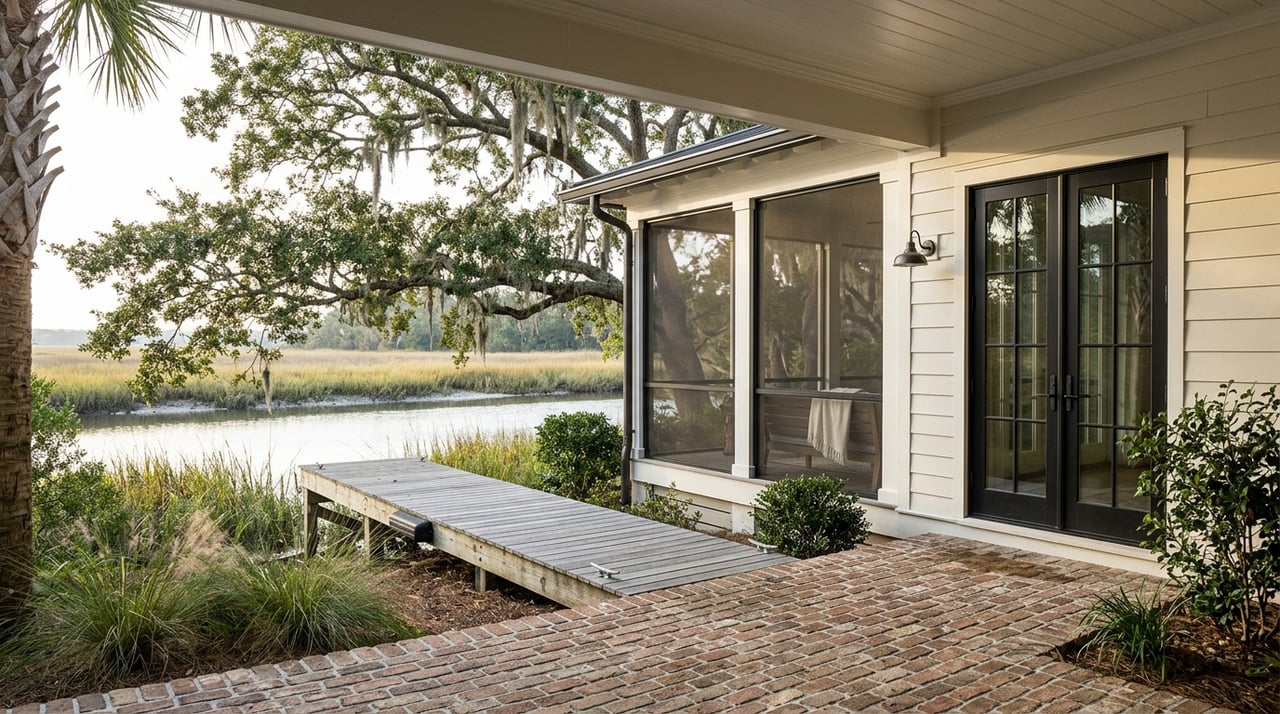
That distinction matters when you begin your home search. On James Island, waterfront living usually means creekfront, marshfront, riverfront, or harbor-edge property rather than continuous ocean frontage. For many buyers, that creates a more residential and grounded feel while still offering a strong connection to the water.
Why James Island Feels So Convenient
A big part of James Island’s appeal is its location between downtown Charleston and Folly Beach. Folly Road serves as the major route through the island, while the James Island Connector links the area to the Charleston peninsula.
From a lifestyle standpoint, that means you can often balance water-oriented living with practical access to dining, work, and recreation. At the same time, daily life depends heavily on a few key corridors, so traffic patterns can play an outsized role in how convenient a property feels from one neighborhood to another.
Main roads shape the experience
Folly Road, Harbor View Road, and Camp Road with Dills Bluff Road form much of the island’s daily backbone. Supporting commercial areas and residential neighborhoods are arranged around these routes, which helps explain why location on James Island is often about more than simple distance.
A home may look close to everything on a map, but your day-to-day experience can vary based on bridge access and corridor conditions. That is one reason local perspective matters when you compare one waterfront pocket to another.
Public Water Access Without a Private Dock
One of the most practical benefits of James Island is that you do not need a private dock to enjoy the water. Public access points make boating, paddling, fishing, and crabbing part of the lifestyle for many residents.
Charleston County lists Riverland Terrace Boat Landing on Wappoo Creek and Battery Island Landing on the Stono River. James Island County Park also offers a paddlecraft launch on the Stono River for canoe, kayak, or paddleboard use.
Key public access points
- Riverland Terrace Boat Landing offers access to Wappoo Creek and the Intracoastal Waterway.
- Battery Island Landing is a public boat ramp with parking and access for boating, fishing, and crabbing.
- James Island County Park provides paddlecraft launch access for smaller non-motorized vessels.
For buyers, this broadens the meaning of waterfront living. You may decide that easy public access meets your needs just as well as private water frontage, especially if you want flexibility without the added responsibility of a dock-focused property.
Waterfront Parks Add Everyday Value
James Island also has public waterfront spaces that add to the lifestyle, even if your home is not directly on the water. These places help turn the island’s setting into something you can actually use and enjoy on a regular basis.
Melton Peter Demetre Park is the only city-owned waterfront park on James Island. It includes a fishing pier, floating dock, sandy waterfront areas, trails, and wide harbor views.
Dock Street Park in Bay Front also offers a fishing dock overlooking Charleston Harbor. For many buyers, these public amenities are part of what makes James Island feel connected to the water beyond individual property lines.
Housing Patterns Are Varied and Historic
Waterfront housing on James Island is not one-note. The island’s residential areas developed over time, and that layered history shows up in lot patterns, street layouts, and how homes relate to the water.
Riverland Terrace, for example, was one of the first modern planned neighborhoods on James Island. It was laid out in the 1920s with curving streets and consistent setbacks, though most homes were built later, largely in the 1950s.
Riverland Terrace and older waterfront character
In established areas like Riverland Terrace, you may find older single-family homes and a street pattern that feels more organic than a newer planned community. That can be especially appealing if you value neighborhood character and homes with a stronger architectural relationship to their setting.
Historical survey materials also note that homes along James Island Creek and Wappoo Creek were influenced by their waterfront locations. In practical terms, that often means site-driven design, with orientation, elevation, views, and access shaping the home more than a standard street-facing plan.
Sol Legare and lot-specific waterfront appeal
Sol Legare offers a different pattern. The town describes it as a historic African American community established after the Civil War, with long, narrow lots that gave farmers access to both waterways and roads.
That history helps explain why some parts of James Island feel especially lot-specific. In these areas, the land itself and its relationship to the water may matter just as much as the surrounding subdivision pattern.
The Biggest Tradeoffs Buyers Should Understand
Waterfront living on James Island can be very appealing, but it rewards thoughtful due diligence. The biggest factors are usually flood risk, drainage conditions, water quality concerns, and traffic.
These are not abstract issues. They are part of the island’s infrastructure story and should be part of your decision-making process from the beginning.
Flooding and drainage matter here
The Town of James Island says Charleston County manages stormwater drainage on the island, while the town maintains drainage structures and applies supplemental stormwater design standards. The town also notes that James Island Creek is an impaired waterway under monitoring by the Town, County, and City, with a watershed plan and task force in place.
Charleston floodplain mapping identifies flood hazards tied to rivers, creeks, tidal creeks, and the Atlantic Ocean. The city’s Central Park Drainage Basin information also says the James Island basin experiences significant flooding due to increased development and restricted conveyance and outfall systems.
For you as a buyer, that means elevation, drainage, and lot conditions deserve close attention. Two homes with similar views can carry very different practical risks based on site specifics.
Infrastructure work is ongoing
James Island is also an area where flood adaptation efforts are active. The town’s Lighthouse Boulevard project states that it addressed flooding concerns on Fort Johnson Road and improved stormwater flow to Parrot Creek.
That is helpful context because it shows both progress and continued complexity. Some areas have seen meaningful improvements, while other low-lying sections remain part of a larger ongoing drainage challenge.
Traffic is part of the lifestyle equation
Because James Island relies on a limited number of major routes and bridge crossings, traffic can affect everyday convenience. This does not make the island less desirable, but it does mean access patterns should be evaluated as part of the overall value of a property.
When buyers think carefully about commute times, beach access, and daily errands, they are usually better able to match the right area of James Island to the lifestyle they want.
Price Positioning in the Coastal Market
For many buyers, James Island stands out as a middle-ground coastal option. According to a May 2026 Redfin snapshot, the median sale price on James Island was $600,000, compared with $962,000 on Folly Beach and $874,000 in Mount Pleasant.
That pricing context helps explain the island’s appeal. You can often find water access, proximity to downtown Charleston, and a strong Lowcountry setting without stepping into barrier-island pricing.
Realtor.com reported James Island as a balanced market in May 2026, with homes selling on average 2.0% below asking. Redfin also showed 21 waterfront homes for sale on James Island with a median listing price of $647,000.
For buyers considering waterfront property, those numbers suggest an opportunity to approach the search with both ambition and discipline. James Island can offer meaningful lifestyle value, but each property still needs a careful, site-by-site review.
Who James Island Waterfront Living Fits Best
James Island tends to work best for buyers who want water as part of everyday life, but not necessarily in the form of direct oceanfront living. If you value marsh views, creek access, harbor scenery, and strong proximity to Charleston, the island often makes a compelling case.
It can be especially attractive if you want a more residential setting with public access points, established neighborhoods, and a range of home types. The key is understanding that this is a nuanced waterfront market where location, elevation, access, and road patterns all matter.
How to Evaluate a James Island Waterfront Home
When you tour homes here, it helps to think beyond the view. A smart evaluation usually includes:
- The type of waterfront setting, such as creekfront, marshfront, riverfront, or harbor-edge
- Public water access nearby if the home does not include private access
- Floodplain and drainage conditions for the specific lot
- Road and bridge access for your daily routine
- How the home’s design responds to the site, views, and elevation
- Whether the area’s character feels more neighborhood-driven or lot-driven
On James Island, details shape value in a very real way. The right property is often the one that aligns not just with your budget, but with how you actually want to live.
If you are considering waterfront property on James Island, a tailored, local perspective can make the process far more efficient and far more confident. To explore the market with thoughtful guidance, Georgia Nettles can help you evaluate the nuances that truly matter.
FAQs
Is James Island oceanfront real estate common?
- No. Waterfront living on James Island is more commonly tied to creeks, marshes, rivers, and harbor edges than continuous ocean frontage.
Can you enjoy boating on James Island without a private dock?
- Yes. Public access points include Riverland Terrace Boat Landing, Battery Island Landing, and the paddlecraft launch at James Island County Park.
What should buyers review before buying waterfront property on James Island?
- Flood risk, drainage conditions, water quality context, and daily traffic access are some of the most important factors to review.
Is James Island mainly a beach town or a residential island?
- James Island is better understood as a primarily residential island with water-oriented amenities and close access to both downtown Charleston and Folly Beach.
How do James Island waterfront prices compare with nearby coastal areas?
- In the May 2026 market snapshot cited in the research, James Island’s median sale price was lower than both Folly Beach and Mount Pleasant, which may appeal to buyers seeking a middle-ground coastal option.