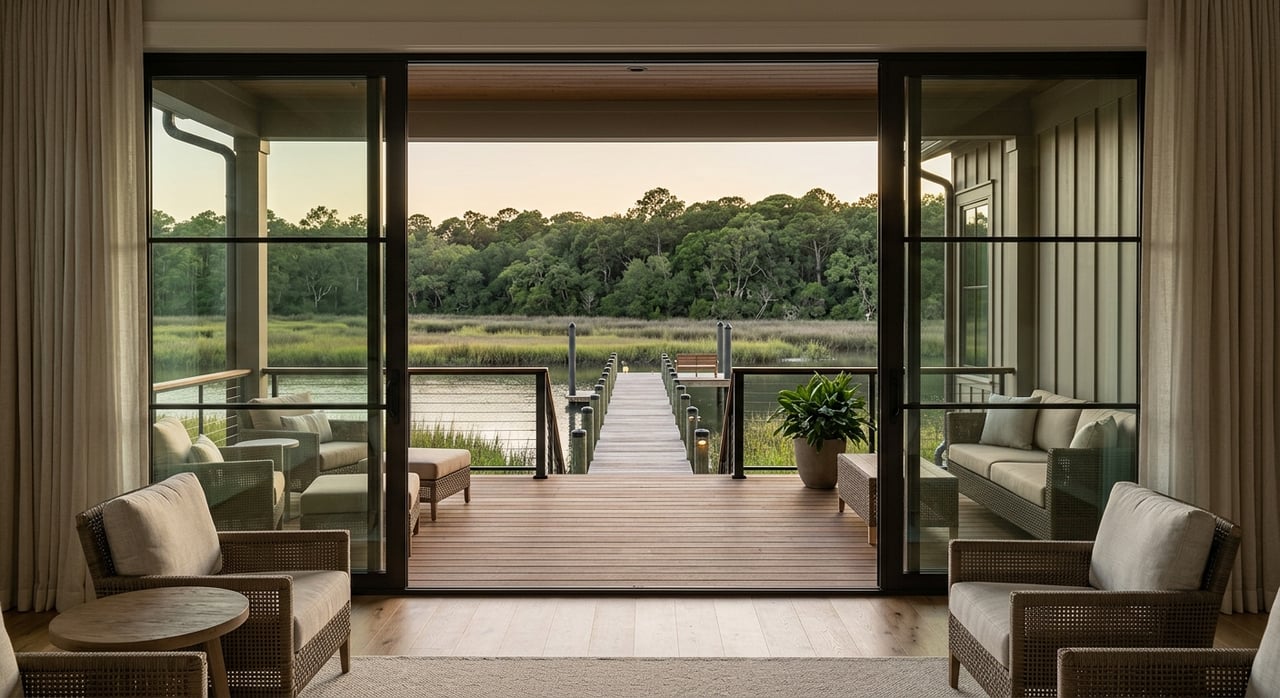
If you have been looking north of Charleston for a quieter coastal lifestyle, Awendaw and McClellanville deserve a closer look. These are not fast-growing suburban communities built around convenience first. They are small, landscape-shaped places where marsh, forest, waterways, and village scale define daily life. If you want to understand what living here really feels like, along with the practical details that matter before you buy, this guide will help. Let’s dive in.
Why Awendaw and McClellanville feel different
Awendaw and McClellanville offer a very different experience from busier parts of the Charleston area. Awendaw reports a population of about 1,200 residents, and its planning vision centers on managed growth, rural character, open space, and protection of waterways and forests. McClellanville presents itself as a historic sea-based village shaped by fishing, shrimping, oystering, tidal creeks, and salt marsh.
That smaller scale is a big part of the appeal. For context, Mount Pleasant had 90,801 residents in the 2020 Census. Compared with larger Charleston-area communities, Awendaw and McClellanville feel quieter, more rural, and more connected to the natural landscape.
Coastal setting shapes daily life
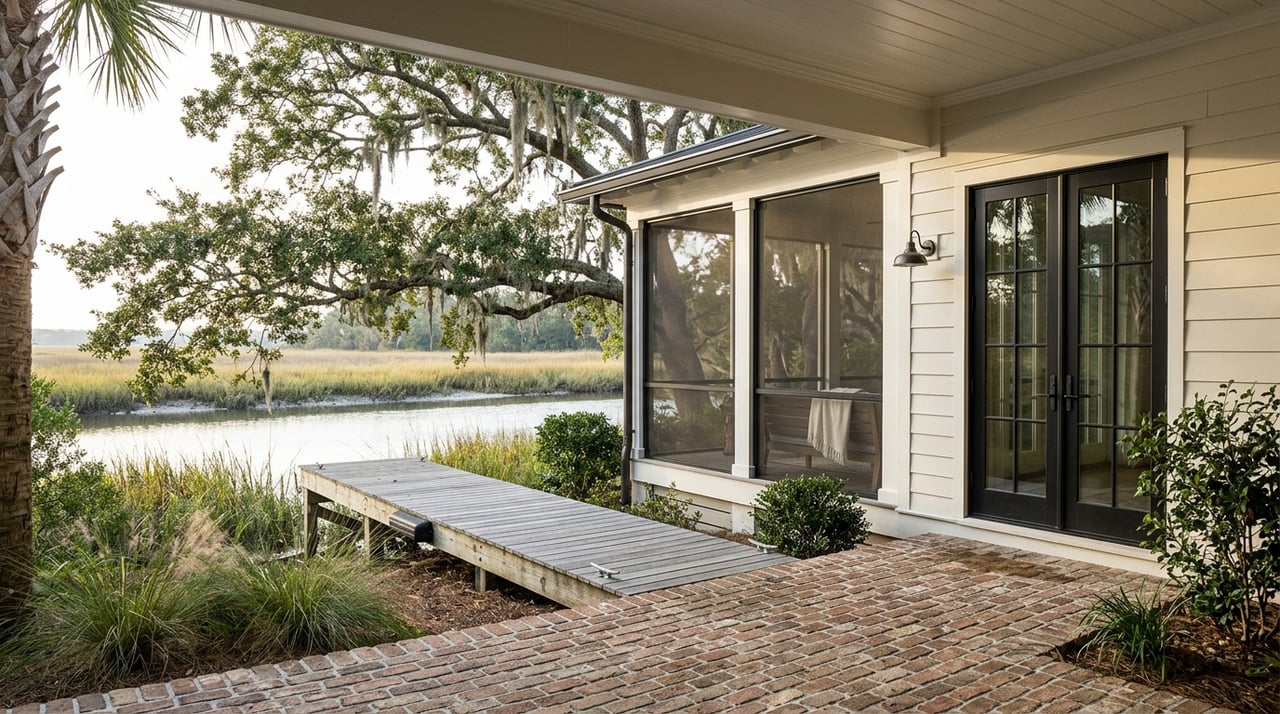
In both towns, the outdoors is not just a weekend amenity. It is part of how people experience the area every day. Forest edges, marsh views, creek access, and boating culture are woven into the local identity.
Awendaw sits between the Francis Marion National Forest and the Cape Romain National Wildlife Refuge. That location gives the town a setting that feels especially protected and nature-forward. McClellanville carries a similar sense of place, with a long village history tied to the water and the working coastal environment.
Outdoor access is a major draw
If you value paddling, boating, hiking, birding, or simply being near open water and preserved land, these communities stand out. The Awendaw Passage of the Palmetto Trail runs seven miles from Buck Hall Recreation Area in McClellanville to the Swamp Fox Trailhead on Highway 17. It also connects to the longer Swamp Fox Passage and the statewide Palmetto Trail system.
Awendaw is also home to the Sewee Visitor and Environmental Education Center, which offers year-round programming focused on the Lowcountry’s forest and refuge ecosystem. For buyers who want a home base near meaningful outdoor access, that is a defining local feature rather than a small bonus.
Boating and paddling are part of the lifestyle
Water access matters here. The Awendaw Creek Canoe Trail moves through salt marsh, oyster banks, and the Intracoastal Waterway, with access to Cape Romain National Wildlife Refuge and Buck Hall. Awendaw also lists Garris Landing as a public boat landing within town.
McClellanville maintains its own town boat landing at 405 Pinckney Street. Its history and identity remain closely linked to the sea, including local traditions around oysters, clams, and shrimp. If your ideal Lowcountry day starts with a boat launch, a paddle, or a view over tidal water, these towns offer a strong fit.
Housing here is intentionally low density
One of the most important things to understand before buying in Awendaw or McClellanville is that the built environment is shaped by local land-use rules. These areas are not designed to resemble standard suburban neighborhoods. Large lots, lower density, and preservation-minded regulations are part of what keeps the character intact.
In Awendaw, the majority of the town is zoned Agricultural General. The town says that zoning permits one residence per 30,000 square feet if state wastewater standards are met. It also removed a smaller as-of-right lot size because town leaders considered it too dense for Awendaw’s rural character.
McClellanville has tighter historic controls
McClellanville’s residential rules are also restrictive in ways buyers should know early. In the Residential District, single-family detached dwellings are permitted, manufactured homes are excluded, and accessory dwelling units are allowed only if they are under 800 square feet.
The Historic District overlay adds another layer. There, a single-household dwelling must sit on at least 0.75 acres, the minimum lot width is 90 feet, and the maximum residential floor area is 3,500 square feet. New construction and exterior changes require a Certificate of Appropriateness.
That matters because McClellanville is not simply marketed as historic. It is documented as a preserved coastal settlement with about 105 residential, commercial, religious, and educational properties dating from roughly 1860 to 1935. For many buyers, that preserved character is the appeal, but it also means you should understand the review process before planning changes.
Utilities require closer attention
For many buyers coming from more urban or suburban markets, utilities may be one of the biggest adjustments. These communities offer a different lifestyle, and that includes different infrastructure expectations. It is important to understand those basics before you make an offer.
Awendaw says there is currently no public wastewater management system, so homes rely on individual septic systems. Because of the high water table, engineered mound systems are common. Public water exists in parts of town, but the town says the system serves only about half of residents.
McClellanville is even more rural in this respect. The town says it has no public water or public sewage, and homes and businesses use wells and septic tanks. For a buyer, that means due diligence around water, septic, site conditions, and maintenance should be part of the conversation from the start.
Daily services are available, but limited
These towns are quiet by design, and daily life reflects that. You will find local resources, but not the level of convenience you would expect in a more built-out suburb. For many buyers, that trade-off is part of the value.
Awendaw lists county floodplain management support, county emergency preparedness services, a small library at Town Hall, local waste-disposal sites, and nearby health options including the St. James-Santee Rural Health Program and Roper St. Francis Mount Pleasant Hospital. McClellanville notes a library branch, post office, boat landing, twice-weekly household trash collection, and nearby health care at the St. James-Santee Family Health Center and Roper St. Francis Mount Pleasant Hospital.
What you gain is room, quiet, and direct access to the natural Lowcountry. What you give up is some day-to-day convenience. For the right buyer, that is not a drawback. It is the point.
Flood and storm planning matter here
Because these are coastal communities shaped by marsh, creeks, and tidal water, flood and storm awareness should be part of your planning. Both towns direct residents toward Charleston County hurricane and flood resources. McClellanville also points residents to FEMA flood maps and county storm-flood information.
That does not mean you should avoid the area. It means you should evaluate a property with clear eyes and good local guidance. In a market like this, understanding elevation, access, water systems, and property-specific conditions is essential.
Who these communities suit best
Awendaw and McClellanville tend to appeal to buyers who want space, privacy, and a strong sense of place. You may be drawn here if you want a primary home or second home that feels tied to the land and water rather than to subdivision living. Buyers looking for boating access, preserved surroundings, and a slower pace often see the value immediately.
They can also be appealing if you appreciate rural parcels, waterfront settings, or historic context. At the same time, they are usually not the best fit if your top priority is dense retail, public utility infrastructure, or a highly conventional suburban layout. The lifestyle is distinctive, and so are the responsibilities that come with it.
Why local guidance matters when buying here
A home search in Awendaw or McClellanville often requires more than comparing square footage and finishes. You may need to evaluate zoning, septic and well setup, flood considerations, lot constraints, access to boating or trails, and in McClellanville, possible historic review requirements. Those details can directly shape what you can do with a property over time.
That is why nuanced local guidance matters so much in these communities. If you are considering a coastal home, rural parcel, historic property, or lifestyle purchase north of Charleston, working with someone who understands the character and constraints of the area can help you buy with more confidence.
If you are thinking about buying or selling in this part of the Lowcountry, Georgia Nettles offers polished, personalized guidance rooted in deep Charleston-area knowledge and a strong understanding of coastal lifestyle properties.
FAQs
What is daily life like in Awendaw and McClellanville?
- Daily life in Awendaw and McClellanville is quiet, nature-forward, and village-scale, with strong access to marshes, waterways, trails, and boating rather than suburban-style convenience.
Are public water and sewer common in Awendaw and McClellanville?
- No. Awendaw has partial public water but no public wastewater system, while McClellanville says it has neither public water nor public sewage and relies on wells and septic tanks.
Is boating important in Awendaw and McClellanville?
- Yes. Awendaw has Garris Landing and the Awendaw Creek Canoe Trail, and McClellanville maintains a town boat landing and has a long history tied to fishing, shrimping, and oystering.
Do historic district rules affect homes in McClellanville?
- Yes. In McClellanville’s Historic District overlay, certain lot, size, and design rules apply, and new construction or exterior changes require a Certificate of Appropriateness.
Are Awendaw and McClellanville similar to larger Charleston suburbs?
- No. Compared with larger communities like Mount Pleasant, both towns feel more rural, lower-density, and more shaped by preserved land, waterways, and village character.
What should buyers review before purchasing in Awendaw or McClellanville?
- Buyers should closely review zoning, lot rules, water and septic systems, flood and storm information, and any historic district requirements that may affect the property.